Driving in Iceland is one of those things that looks effortless on social media. Wide-open roads, no traffic, dramatic scenery on every side. What the reels don’t show is the rental car door getting ripped off by a gust of wind, the tourist parked in the middle of the road to photograph a waterfall, or the driver who entered a roundabout and immediately cut off the car in the inner lane.
I’ve been guiding tours on these roads for over four years now, and the reality is that driving in Iceland is an entirely different experience from driving anywhere else in Europe or North America. The roads are well-maintained for the most part, the infrastructure is solid, and Icelanders are generally calm and courteous drivers. But the weather is the wildcard. It changes everything, and it changes fast.
This guide is everything I wish every visitor read before picking up their rental car. Whether you’re planning a summer Ring Road trip or a winter Northern Lights chase, these are the rules, the tools, and the honest advice that will keep you safe on Icelandic roads.
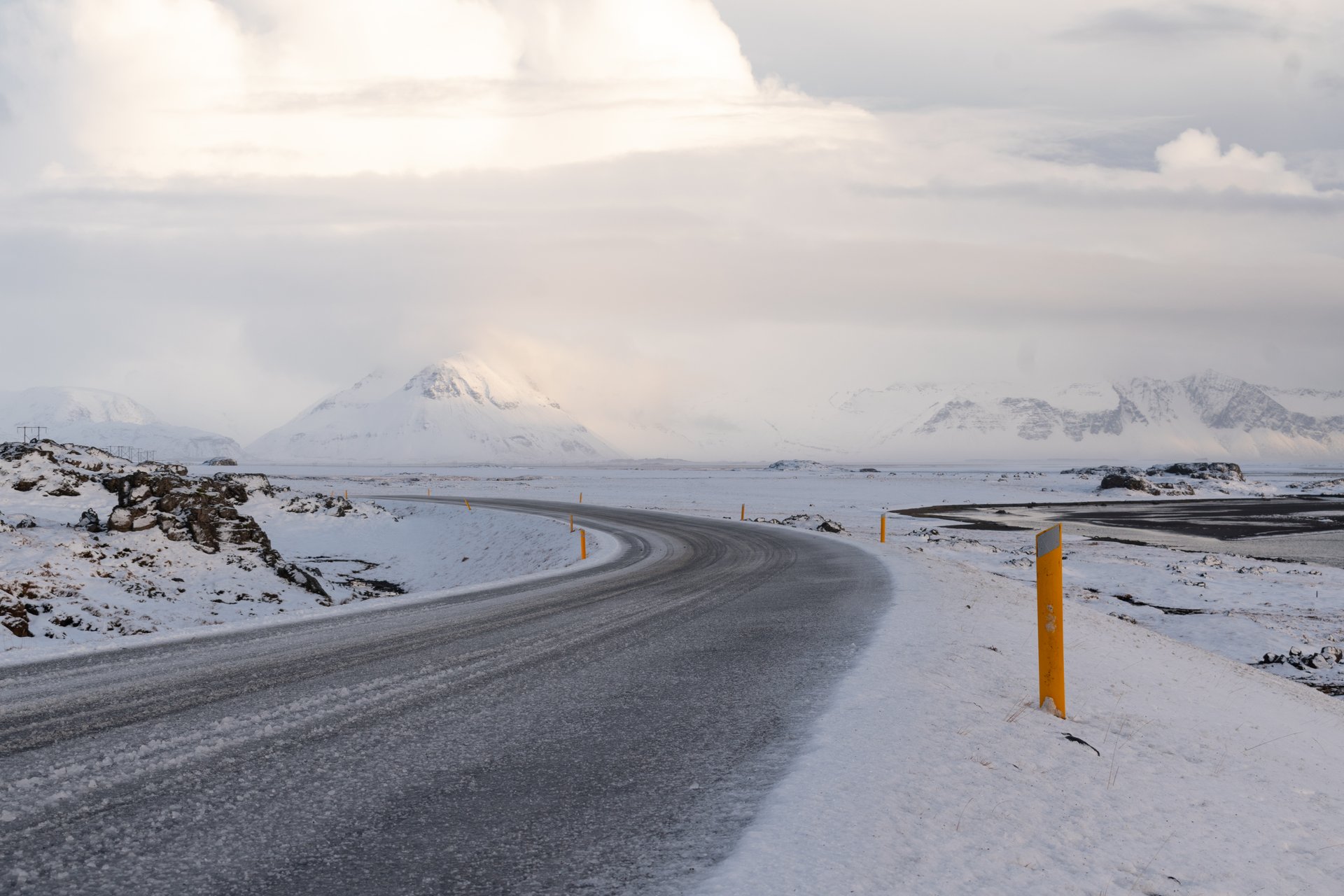
Before You Drive: The Three Websites You Must Check
Before you start the engine — before you even plan your day — there are three websites every driver in Iceland needs to bookmark. Locals check them. Tour guides check them. You should too.
Safetravel.is is your first stop. Run by the Icelandic Association for Search and Rescue (ICE-SAR), it aggregates alerts and specific conditions across the country. If there’s a volcanic eruption affecting a road, a landslide warning, an avalanche risk, or any travel advisory, it shows up here. Think of it as your safety dashboard for the day.
Vedur.is is the Icelandic Meteorological Office. This is where you check the weather — not your phone’s weather app, which is notoriously unreliable in Iceland. Vedur.is gives you wind speed, precipitation, temperature, and most importantly, weather warnings color-coded by severity. When a warning goes up, take it seriously.
Road.is shows you real-time road conditions across the entire country. Every road is color-coded: green means easily passable, light blue means spots of ice, dark blue means slippery, purple means extremely slippery, and grey means difficult conditions where you likely need a 4x4. You can check the full definitions of each condition code here.
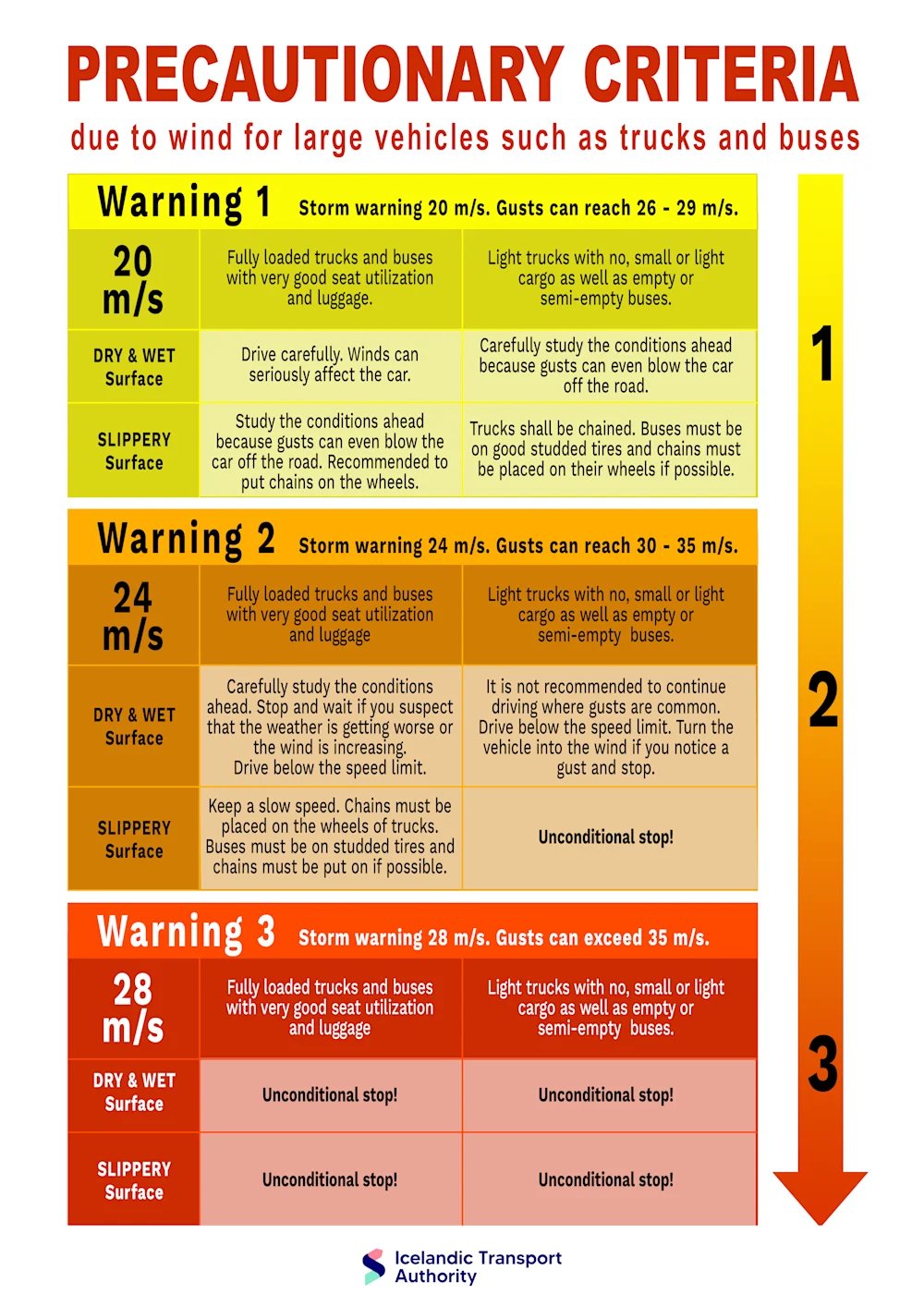
Here’s the thing most visitors don’t understand: wind speed alone is not an indicator of whether you can drive. Road conditions alone are not either. It is the combination of weather conditions, road conditions, and the type of vehicle you’re driving that determines whether a road is safe for you. A 20 m/s wind on a dry paved road in a heavy SUV is manageable. That same wind on an icy gravel road in a small hatchback is a recipe for disaster. Always cross-reference all three sources before heading out, and adjust your plans accordingly.
The Do’s and Don’ts of Driving in Iceland
Before we get into the specifics of road types and regulations, here are the non-negotiable rules that will keep you safe and out of trouble. Some of these come from the law. Others come from common sense that visitors discover the hard way.
Do
Turn your headlights ON. Not on “auto.” ON. This is the single most important thing on this list, so let me explain why. First: it is Icelandic law. Headlights must be on 24 hours a day, 7 days a week, 365 days a year — regardless of season, time of day, or weather. There is no exception. Second, and more critically: when your headlights are set to “auto,” they rely on a sensor to detect low light. In a blizzard or thick fog — which are white, not dark — your car’s sensor often decides there’s enough ambient light and does not turn your lights on. You are now driving in near-zero visibility, completely invisible to oncoming traffic. This is beyond dangerous for you and for every other driver on that road. Turn them ON manually every single time you start the car.
Park against the wind. When you stop at a viewpoint or get out of the car, always position the vehicle so the wind hits the front — never the side or the back. If you open a car door into a strong Icelandic wind gust, the wind will catch it like a sail and rip it right off the hinges. This is not an exaggeration. Rental companies deal with this damage constantly, and your insurance may not cover it.
In winter, keep blankets and warm clothes in the car. If something goes wrong — a breakdown, getting stuck, a road closure that strands you — temperatures can drop fast and rescue teams may take time to reach remote areas. A few warm layers and a blanket in the back seat can make a real difference.
Always drive with at least half a tank of gas. Gas stations can be far apart, especially in the north, east, and highlands. Running low in a remote area with no cell signal is a situation you want to avoid entirely.
Heed the weather warnings. When vedur.is issues an orange or red warning, it means conditions are genuinely dangerous. Locals cancel plans. Tour operators cancel tours. You should cancel your drive too. Iceland will still be there tomorrow.
Be flexible. This ties into everything above. The single best quality you can have as a driver in Iceland is flexibility. Weather changes in minutes. Roads close without warning. If you build your itinerary with some give, you’ll have a far better trip than if you try to stick to a rigid schedule through a storm.
Don’t
Do not park on the road. Do not park on the side of the road. Do not park anywhere that is not a designated parking spot. There is no excuse for this besides an actual mechanical breakdown. I cannot stress this enough. Iceland’s roads are often narrow, with limited visibility around curves and over hills. When a tourist stops their car on the shoulder to take a photo of a horse or a waterfall, they create a genuinely dangerous obstacle for every other vehicle on that road. Pull into a parking area, a pullout, or a rest stop. They exist for a reason, and they’re well-signed. If there isn’t one nearby, keep driving until there is.
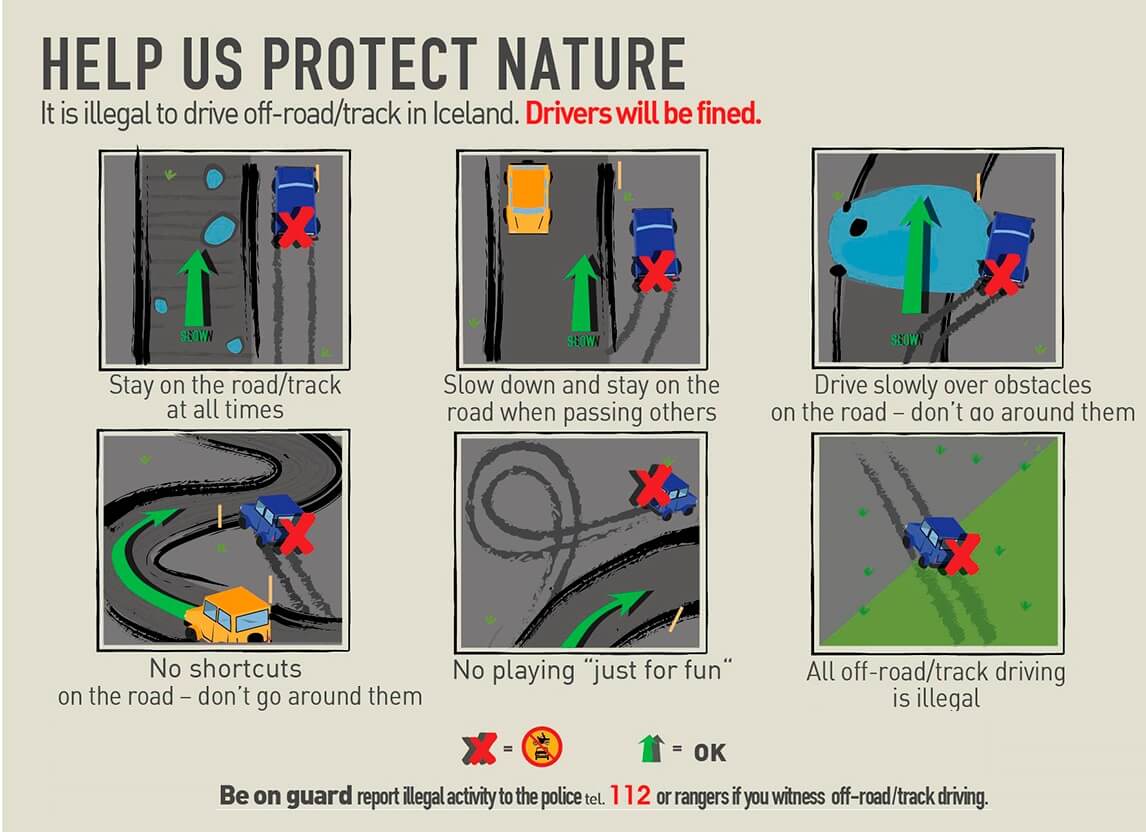
Do not drive off-road. This means: do not drive on anything that is not a marked road or track. The Icelandic landscape looks rugged, but it is extremely fragile. Moss that takes decades to grow can be destroyed by a single set of tire tracks. The damage is visible for years. Off-road driving is not just frowned upon — it is highly illegal. Fines can reach hundreds of thousands of ISK (thousands of dollars). And unlike some offenses where you might get away with a warning, this one will be reported to the police if locals see you. Icelanders take the protection of their land very personally, and rightfully so.
Road Types and Conditions
Iceland has a surprisingly well-developed road network for a country of 380,000 people, but the roads vary wildly depending on where you are.
Route 1: The Ring Road
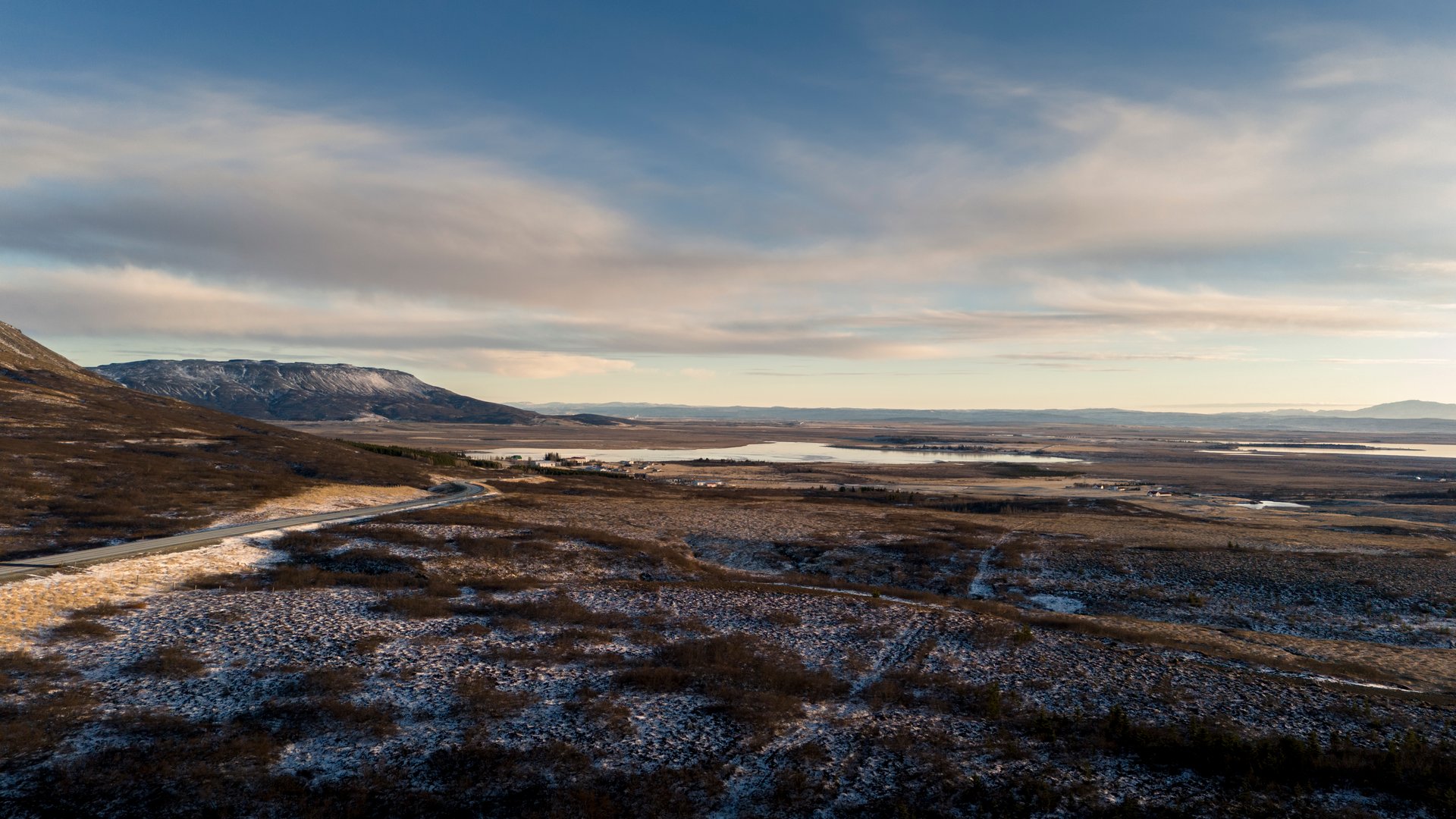
The Ring Road (Þjóðvegur 1) circles the entire island over roughly 1,322 kilometers. Most of it is paved, two-lane, and well-maintained. This is the backbone of Icelandic travel, connecting all major towns and most tourist destinations. In summer, it’s a comfortable drive for any vehicle. In winter, conditions on the northern and eastern stretches can deteriorate quickly. If you’re considering a full lap around Iceland, check out our 7-day Ring Road itinerary for a well-paced route.
Numbered Roads (Two and Three Digits)
Secondary roads branch off the Ring Road to reach specific destinations — waterfalls, peninsulas, villages. Two-digit roads are generally paved or high-quality gravel. Three-digit roads tend to be gravel and can range from smooth to rough depending on the season and maintenance schedule. Most standard rental cars handle these fine in summer, though you’ll want to reduce your speed on gravel.
Single-Lane Bridges
You’ll encounter these throughout rural Iceland. They’re exactly what they sound like — bridges wide enough for one car at a time. The rule is simple: the car that arrives first has the right of way. If you’re both approaching at the same time, the car closer to the bridge goes first. There are small pullouts on either side for the waiting vehicle. Slow down, assess, and don’t try to race onto the bridge.
Gravel Roads
A significant portion of Iceland’s road network is unpaved gravel (malbikvegur). These roads kick up rocks that can crack windshields and chip paint — which is why gravel protection insurance exists and why you should seriously consider it. The key rule on gravel: slow down. Especially when you see an oncoming vehicle, reduce speed to minimize the rock spray.
F-Roads: The Highland Tracks
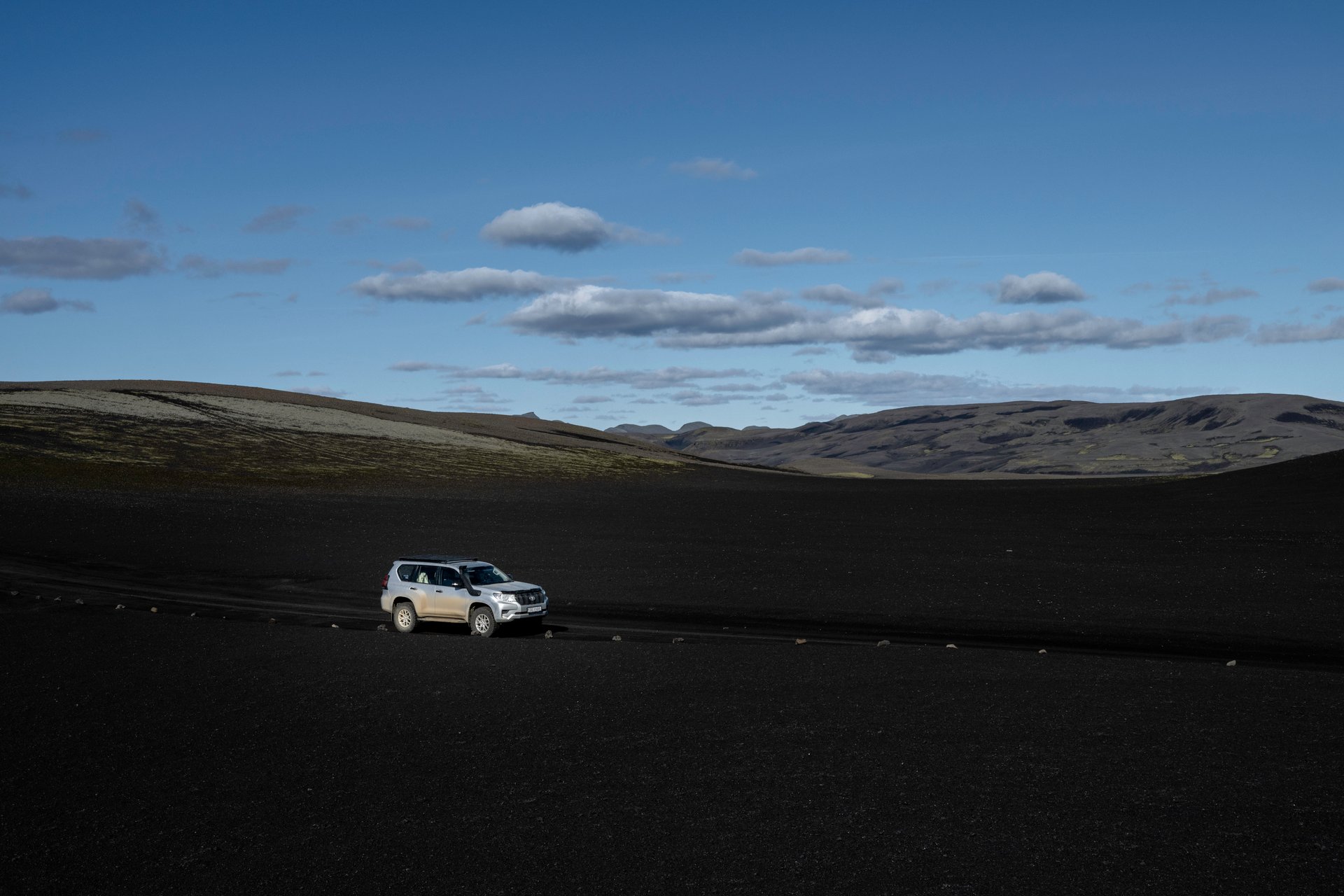
F-roads (fjallvegir) are a category of their own. These are rough mountain tracks through Iceland’s uninhabited interior highlands, marked with an “F” prefix (F26, F35, F88, etc.). They are only open from roughly late June through September, depending on conditions. A 4x4 vehicle is mandatory by law — not recommended, mandatory. Regular cars and even some smaller SUVs are not legally permitted, and your rental contract will explicitly exclude F-road coverage for non-4x4 vehicles.
F-roads involve unbridged river crossings, loose volcanic gravel, steep inclines, and conditions that change daily. River depths fluctuate with temperature and rainfall — a crossing that was knee-deep in the morning can be waist-deep by afternoon if the glacial melt picks up. If you’ve never forded a river in a vehicle before, an F-road is not the place to learn.
The highlands are some of the most spectacular landscapes in Iceland, but they demand experience, preparation, and the right vehicle. Many experienced Iceland travelers choose to access the highlands with a guide and a proper super jeep rather than risk it alone — and that’s a perfectly reasonable decision. Popular highland destinations like Landmannalaugar and Kerlingarfjöll can be reached safely on guided day tours.
Speed Limits and Traffic Rules
Iceland’s speed limits are straightforward:
- 30–50 km/h in urban areas (varies by town and zone)
- 80 km/h on gravel roads
- 90 km/h on paved roads outside towns
These are maximums, not targets. When conditions are poor — rain, wind, ice, fog, gravel — you should be driving well below the posted limit. Icelandic police do enforce speed limits with both fixed cameras and mobile speed traps, and the fines are steep.
Other rules to know:
- Iceland drives on the right side of the road
- Seatbelts are mandatory for all passengers, front and back
- Mobile phone use while driving is illegal (hands-free only)
- The legal blood alcohol limit is 0.05% — effectively zero tolerance by most visitors’ standards
- Right turns on red are not allowed anywhere in Iceland
Roundabouts: The Rule Everyone Gets Wrong
Iceland’s roundabouts follow a rule that confuses almost every tourist, because it works differently from most other countries: the inner lane always has priority.
If you’re in the outer lane and the car next to you in the inner lane wants to exit, you must yield and let them cross in front of you. This is the opposite of what many European and North American drivers expect, and it’s the source of countless near-misses at Reykjavík roundabouts.
Here’s how to handle them properly:
Taking the first exit? Enter in the outer lane (right lane), signal right, and exit.
Going to the second exit or beyond? Enter in the inner lane (left lane). When you’re ready to exit, signal right and move to the outer lane to leave. Traffic in the outer lane must yield to you.
Already in the outer lane and want to continue past the first exit? Signal left to let other drivers know you’re not exiting yet.
The signaling is important. Indicate right when you’re exiting, regardless of which lane you’re in. If you’re in the outer lane and continuing, indicate left. It sounds counterintuitive at first, but after a few roundabouts it becomes second nature.
One more note: Reykjavík’s roundabouts during rush hour (roughly 08:00–09:00 and 16:00–17:30) are the most challenging. If you’ve just picked up your rental car and you’re not confident with the rules yet, avoid driving through central Reykjavík during these times.
The New Kilometric Road Tax (2026)
As of January 1, 2026, Iceland replaced its old fuel tax with a new kilometer-based road charge. Every vehicle on the road — petrol, diesel, electric, hybrid — now pays 6.95 ISK per kilometer driven.
For tourists renting a car, the practical impact is that your rental company will pass this cost through to you. How they do it varies: some charge per-kilometer based on your odometer reading, others apply a flat daily rate (typically around 1,390–1,550 ISK per day). Either way, it will show up on your final bill.
The good news is that fuel prices dropped when the old fuel tax was removed — petrol went from roughly 279 ISK/L down to around 183 ISK/L. So while you’re paying the kilometer charge separately, your overall driving costs haven’t changed dramatically.
A few things this tax does not cover: tunnel tolls (specifically the Vaðlaheiðargöng tunnel in North Iceland, which has its own separate toll), parking fees, and ferry costs.
I’ve written a detailed breakdown of exactly how this new tax works, what it means for your rental bill, and how it compares to the old system in a dedicated article: Iceland’s New Kilometer Road Tax: What You Need to Know.
Fuel, Charging, and Gas Stations
Fuel prices in 2026 sit around 183–270 ISK per liter for petrol and roughly 205 ISK for diesel, depending on the station and location. The cheapest chains are Orkan (unmanned stations with consistently lower prices) and Costco (if you have a membership and you’re filling up in Reykjavík).
A few things to keep in mind about fueling up in Iceland:
Most rural stations are unmanned and card-only. They accept credit and debit cards with a PIN. Some international cards don’t work — test yours at a staffed station first before you’re stranded at an unmanned pump in the Eastfjords.
Station density drops dramatically outside the southwest. Along the south coast and around Reykjavík, stations are frequent. In the north, east, and along remote stretches of the Ring Road, you can easily drive 200+ km between stops. This is why the half-tank rule from the Do’s section isn’t optional — it’s essential.
EV charging infrastructure is growing but still has gaps. If you’re renting an electric vehicle, plan your charging stops carefully using the rental company’s recommended app. The network covers the Ring Road and major towns reasonably well, but detours to remote peninsulas or lesser-known destinations can leave you anxious about range.
Parking in Reykjavík
Reykjavík uses a color-coded parking zone system. The closer to the city center, the more expensive and restricted the parking.
P1 (Red zone) covers downtown — Laugavegur, Skólavörðustígur, the harbor area. This is the most expensive zone with the shortest time limits.
P2, P3, P4 zones extend outward with progressively lower rates and longer or unlimited parking times.
Most visitors find it easier to park outside the city center — in the P3 or P4 zones — and walk in. Reykjavík is a small, very walkable city, and you’ll often spend more time circling for a P1 spot than the walk would take. If you’re stuck in the city on a rainy day, there’s plenty to do without a car.
Winter vs. Summer Driving
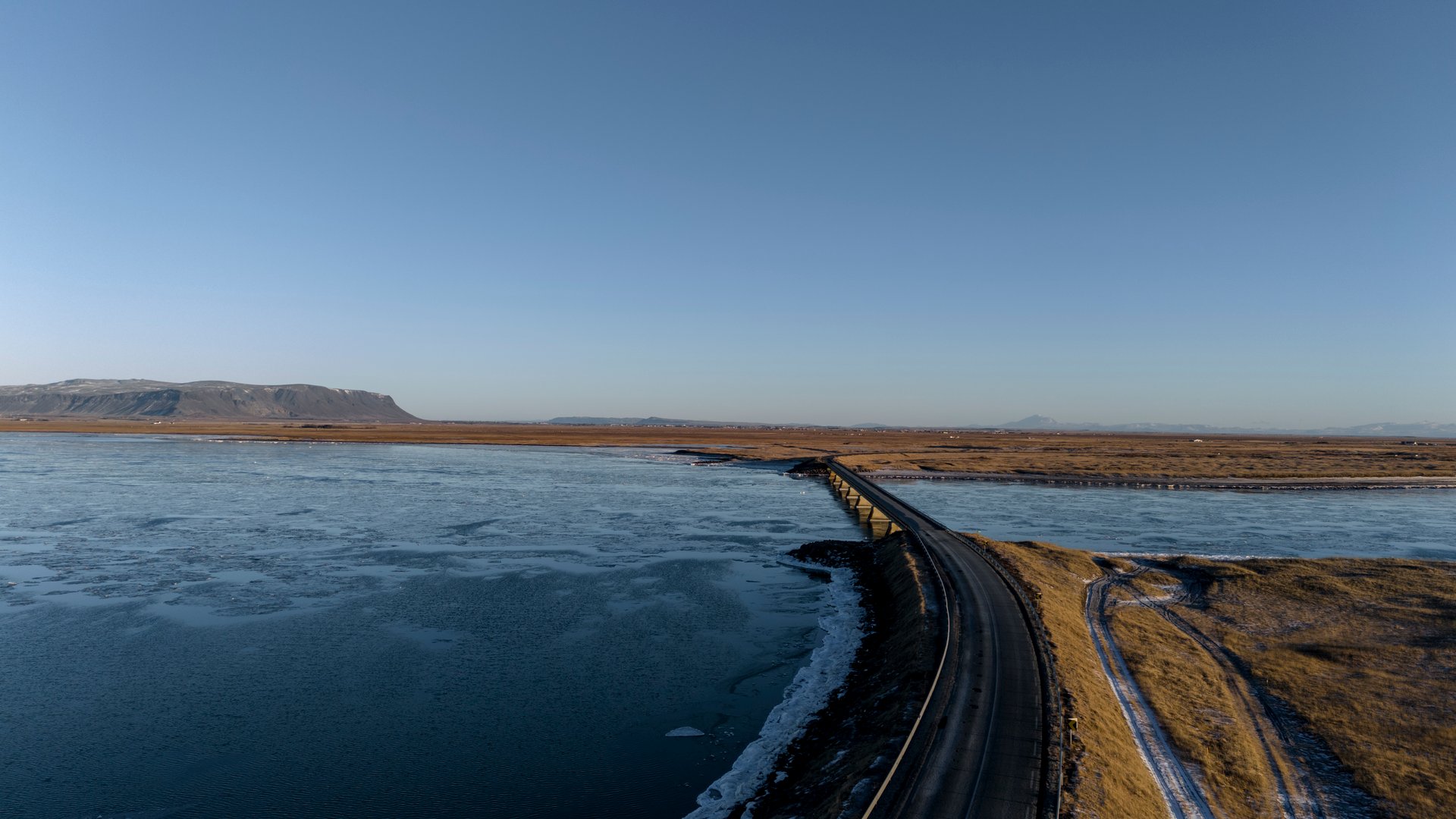
Summer driving in Iceland (June–August) is, for the most part, a pleasure. Long daylight hours (up to 24 hours around the solstice), dry roads, and mild temperatures make the Ring Road accessible to any standard rental car. The main hazards are wind, gravel roads, and the occasional sheep wandering onto the road with zero regard for traffic. For a deeper comparison of traveling in each season, see our winter vs. summer Iceland guide.
Winter driving (November–March) is a completely different challenge. Days are short (4–5 hours of daylight in December), roads are frequently icy or snow-covered, and storms can reduce visibility to near zero. Rental cars in winter come equipped with studded winter tires, which help enormously but don’t make you invincible.
Key winter driving considerations:
- Check road.is obsessively. Road closures happen regularly and can change your entire route for the day
- Allow significantly more time for every drive. A two-hour summer drive can become four hours in winter
- Stick to Route 1 and the southwest corner if you’re not experienced with winter driving. The north and east get the worst conditions
- Whiteout blizzards are real and terrifying. If visibility drops to nothing, pull over safely and wait. Do not try to push through
- Black ice (invisible ice on what looks like a dry road) is common, especially on bridges and shaded stretches
Common Mistakes Tourists Make on Icelandic Roads
After nine years of driving these roads daily, I’ve seen the same mistakes over and over. Here are the ones that matter most:
Underestimating wind. Iceland’s wind is not like wind elsewhere. Gusts of 25+ m/s are common and can physically push a car sideways on the road or rip a door off when you open it. Check vedur.is before you drive, every single time.
Not slowing down on gravel. The transition from paved road to gravel often comes without much warning. If you’re doing 90 km/h and suddenly hit loose gravel, you can lose control in an instant. Slow down before the transition.
Stopping on blind hills and curves. Icelandic roads have a lot of crests and curves with zero forward visibility. Stopping — or even slowing dramatically — at these points puts you at real risk of being rear-ended.
Ignoring the wind direction when opening doors. Worth repeating: always park with the wind hitting the front of the car, never the side. Doors ripped off by wind are one of the most common (and most expensive) rental car claims in Iceland.
Driving into rivers without preparation. If you’re on an F-road with a river crossing, walk it first if you can. Check the depth, the current, and the bottom. Enter slowly, in low gear, at the shallowest and widest point. If you’re not sure, don’t cross.
Assuming summer means easy driving. Even in July, Iceland can throw fog, rain, and strong wind at you. The weather doesn’t take a summer holiday.
Not having an emergency plan. Save the emergency number (112) in your phone. Download the 112 Iceland app — it lets you share your GPS location with rescue services. Carry a charged phone and a car charger at all times.
The Stress-Free Alternative
I’ll be honest with you: I wrote this guide to be genuinely helpful, and I hope it makes your self-drive trip safer and more enjoyable. But I also want to be transparent about something I see constantly.
A significant number of our clients at Lilja Tours originally planned to rent a car and drive themselves. They switched to a private tour after researching the driving conditions, the weather unpredictability, and the logistics — especially for winter trips. Not because they couldn’t drive, but because they decided they’d rather actually enjoy Iceland instead of white-knuckling through a snowstorm while trying to find a waterfall.
On a private tour, you get picked up at your hotel, driven by someone who knows every road and every weather pattern, and dropped off at the end of the day with nothing to worry about except which photos to post. No rental car stress, no insurance headaches, no parking zones, no F-road anxiety.
It’s not the right choice for everyone. Some people love the freedom of a road trip, and Iceland is a fantastic place for one — in summer, with good preparation. But if you’re visiting in winter, traveling with young children, have limited time, or simply want to relax and let someone else handle the logistics, a private tour with a local guide is worth considering.
We offer day tours covering all the major routes — Golden Circle, South Coast, Snæfellsnes, and more — as well as fully custom multiday itineraries tailored to exactly what you want to see.
FAQ
Do I need a 4x4 in Iceland?
For summer travel on the Ring Road and paved secondary roads, a standard car is fine. For F-roads, a 4x4 is legally required. For winter travel, a 4x4 or at minimum a capable SUV is strongly recommended — the extra ground clearance and drivetrain make a real difference on icy and snow-covered roads.
Can I drive the Ring Road in winter?
You can, but it requires caution and flexibility. The southern and western stretches are generally manageable. The northern and eastern sections are more exposed to severe weather and closures. Allow extra days in your itinerary so you’re not forced to drive through bad conditions to catch a flight.
How do single-lane bridges work?
The car that arrives first has the right of way. If you arrive at the same time, the car closer to the bridge goes first. There are pullouts on either side. Slow down as you approach and assess the situation — don’t race onto the bridge.
Is it safe to drive in Iceland in winter?
It can be, with proper preparation, the right vehicle, and a flexible attitude. But “safe” depends entirely on your experience with winter driving. If you’ve never driven on ice and snow, Iceland in January is not the place to start. Check conditions daily, don’t push through storms, and have a backup plan for every day of your trip.
What happens if I get caught in a storm while driving?
Pull over as far off the road as safely possible, turn on your hazard lights, and wait it out. Do not try to drive through a whiteout — you won’t be able to see the road, the edge of the road, or oncoming traffic. If you feel unsafe, call 112. Storms in Iceland tend to pass relatively quickly, and waiting 30–60 minutes often (but not always) makes the difference.
Last updated: March 2026