If you are planning a private tour of Iceland with your family, you are already thinking about this trip the right way.
Iceland is one of the safest, most family-friendly countries you can visit. The infrastructure is modern, the air is clean, crime is virtually nonexistent, and the entire country is built around outdoor experiences that naturally engage children, teenagers, and adults alike. Most families come back saying it was the best trip they have ever taken together.
But here is what most travel guides do not tell you: the way you experience Iceland matters more than what you see. A family trying to navigate rental car logistics, weather changes, and age-appropriate activities on the fly will have a very different trip than a family that steps into a vehicle each morning with someone who knows the terrain, reads the weather, and adjusts the day around the people in the car.
This guide explains why a private tour works so well for families — including multigenerational groups spanning grandparents to grandchildren — and how to think about planning one.
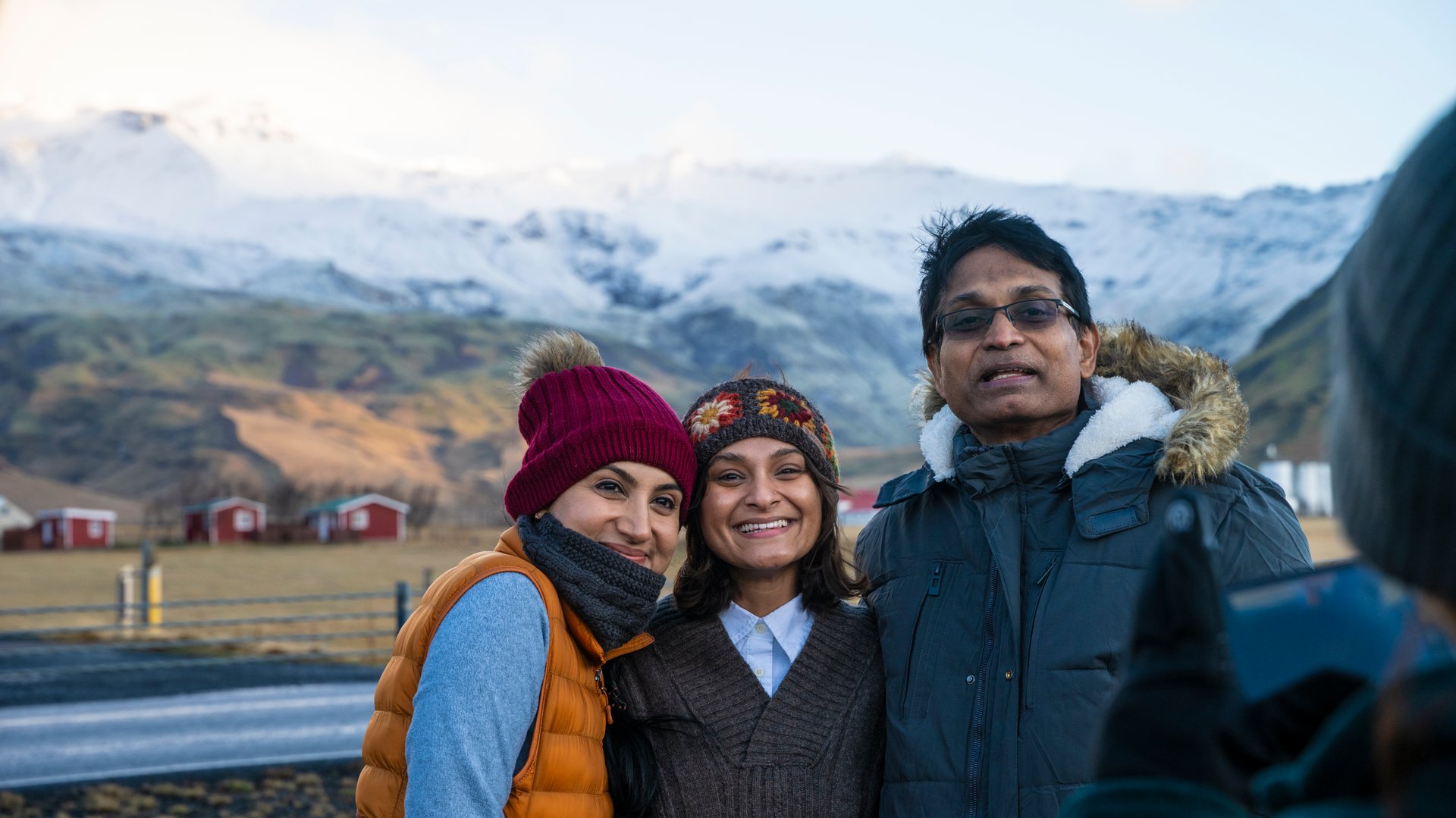
What Makes Iceland a Natural Fit for Family Travel
Safe, Clean, and Built Around the Outdoors
Iceland consistently ranks among the safest countries in the world. There is no violent crime to speak of, the tap water is among the purest on the planet, and the entire culture is oriented around spending time outside. Children here grow up hiking, swimming in geothermal pools, and exploring volcanic landscapes from a young age.
For visiting families, the practical side is reassuring. Roads are well maintained. Medical facilities are modern and accessible. Nearly everyone speaks English. Restaurants are welcoming to children and there is a casualness to daily life here that puts families at ease.
The natural environment is the main attraction, and it requires no tickets nor queues. Waterfalls, lava fields, black sand beaches, glacier views — most of the experiences that define an Iceland trip are free and accessible. That changes the dynamic of a family trip. You are not dragging children through museums or managing crowd anxiety. You are standing together in front of something extraordinary, and the reaction is the same whether you are eight or eighty.
A Country That Works for Every Age — From Toddlers to Grandparents
What makes Iceland particularly well suited for families is the range. The same destination works for a couple with a two-year-old and a multigenerational group spanning four decades. The landscapes are inherently engaging — children do not need to understand geology to be fascinated by a geyser erupting or a glacier calving.
The key is calibrating the experience to the people on the trip, and that is where the way you travel matters more than where you go.
The Multigenerational Advantage — Why Iceland Brings the Whole Family Together
Why More Families Are Planning Three-Generation Iceland Trips
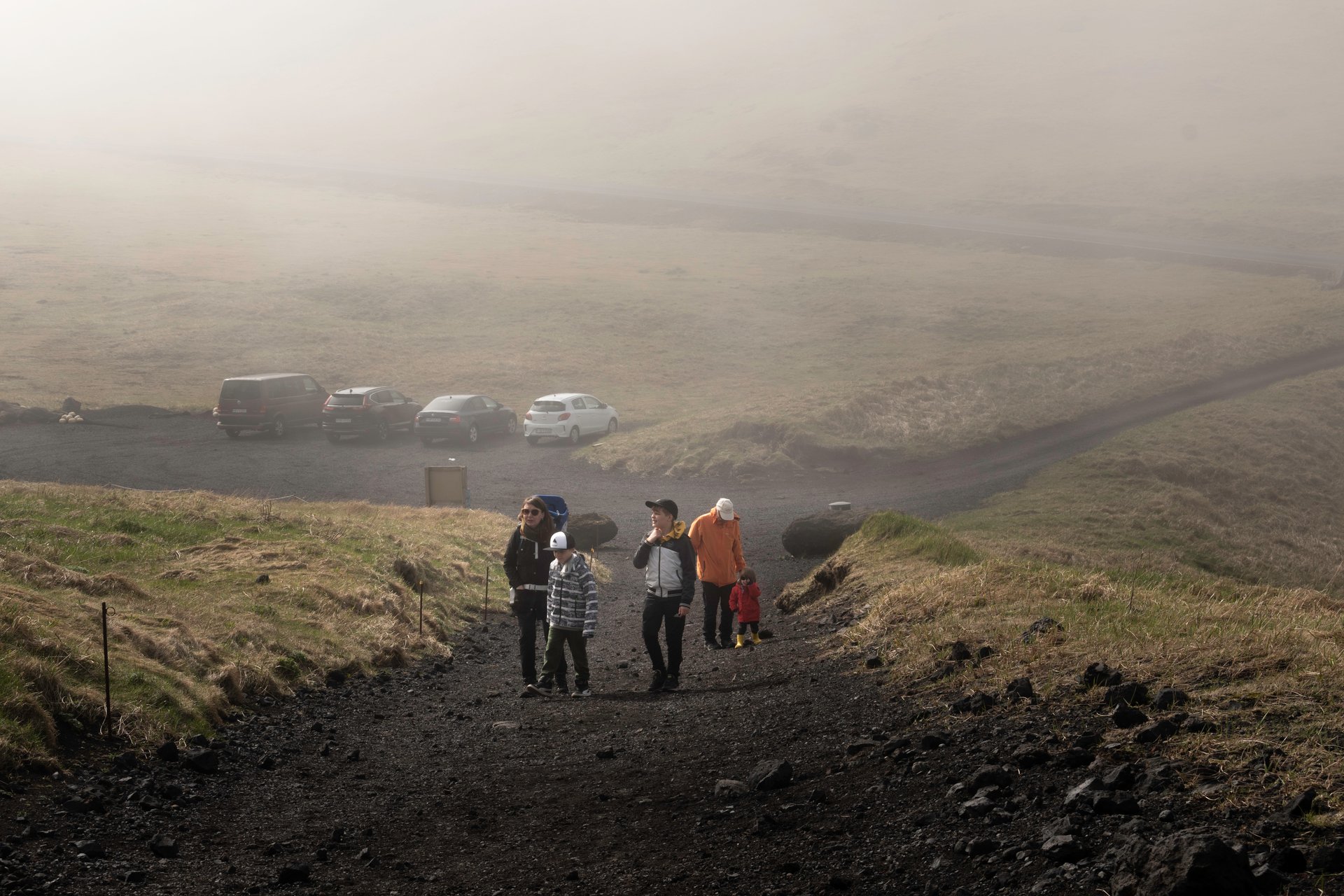
One of the clearest trends I have seen over the past four years is the rise of multigenerational travel to Iceland. Grandparents, parents, and children — sometimes spanning ages eight to eighty — booking a trip together. Iceland works for this because the shared experiences are genuinely shared. A waterfall is impressive at any age. A hot spring feels good at any age. A glacier does not care how old you are.
What these families are really looking for is time together in a place that forces no one to compromise. Not a beach resort where the teenagers are bored. Not a city trip where the grandparents are exhausted by day two. Iceland is the rare destination where everyone in the group is looking at the same thing and feeling the same thing — and that is what makes the trip memorable years later.
Activities That Work Across Ages (and the Ones That Don’t)
Some of Iceland’s best experiences have no age restrictions at all. Whale watching from a boat, horseback riding through countryside, visiting volcanic craters, walking behind waterfalls, exploring lava caves with illuminated walkways — these work for anyone who can walk.
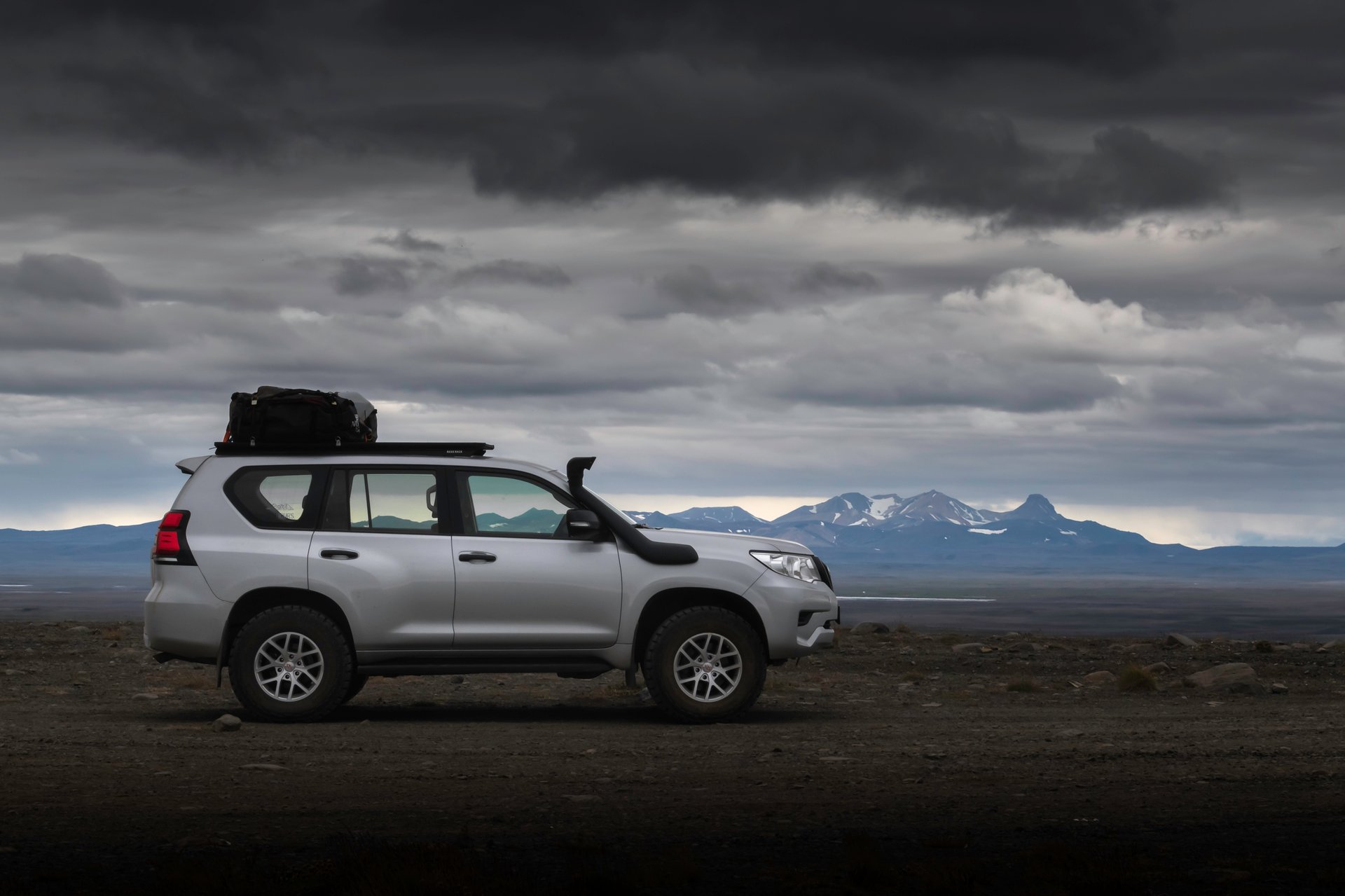
Other activities have specific age minimums that families should know about. Glacier hikes typically require participants to be at least eight, and some operators set the bar at ten. Snorkeling in Silfra requires a minimum age of twelve and the ability to wear a dry suit. Snowmobiling usually starts at eight as a passenger and sixteen as a driver. Highland F-road access has no age limit, but the terrain demands a capable vehicle and a driver who knows the river crossings — not a rental car experiment with children in the back seat.
The best family itineraries layer both: universally accessible experiences that anchor each day, and age-appropriate add-ons that give different members of the group something that suits them.
Pacing a Trip When Your Group Spans 8 to 80
The biggest mistake multigenerational groups make is overloading the itinerary. Three stops per day is plenty. Two is often better. The reality of traveling with a mixed-age group is that someone will be slower, someone will need a break, and the schedule needs room to breathe.
This is where Iceland’s structure actually helps. The distances between highlights create natural pauses. The drive from one waterfall to the next is thirty minutes of passing through landscapes that change every few kilometers. No one is bored in the car. The journey between stops is part of the experience.
A well-paced family itinerary includes one or two main highlights per day, a relaxed lunch, and a flexible afternoon that can shift based on energy, weather, or spontaneous discoveries. The geothermal pool in the nearest town is always there as a backup plan — and it is often the part of the day the children remember most.
What Kids Actually Love About Iceland (by Age Group)
Young Children (2–5): Horses, Hot Pots, and Waterfalls
Toddlers and young children do not need an itinerary. They need a few moments of wonder each day, and Iceland delivers those effortlessly. The Icelandic horse is gentle, small, and endlessly patient — some non-riding farms welcome young visitors. Geothermal pools are warm, safe, and available in nearly every town. And waterfalls — the sound, the spray, the sheer scale — are mesmerizing for small children in a way that no playground replicates.
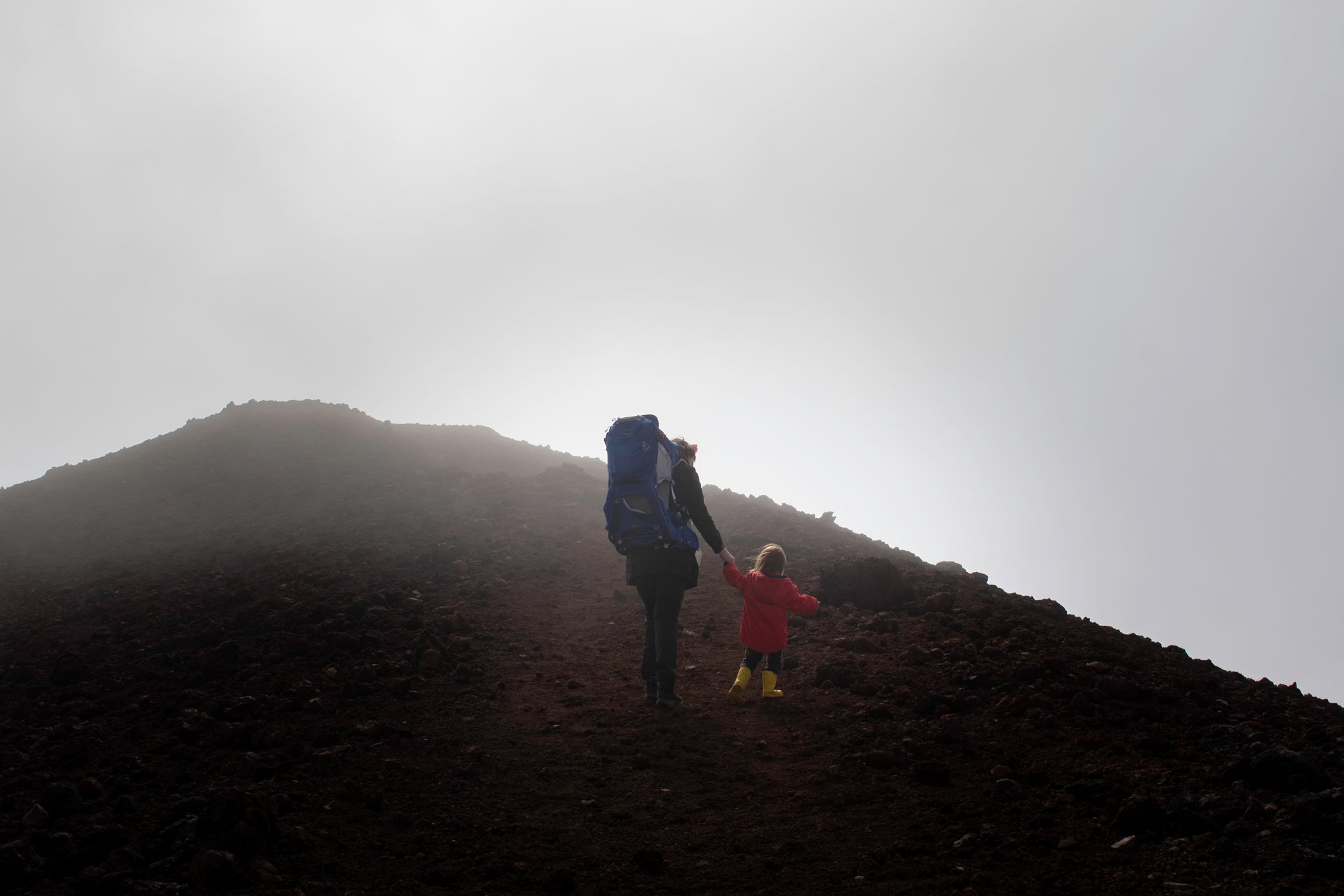
The key with this age group is pace. Shorter days, fewer transfers, more flexibility. A private tour makes this possible because the vehicle is yours, the schedule is yours, and stopping for a nap in a scenic parking area is not a problem — it is the plan.
Another perk that happens most often than not: If your kid is comfortably napping in the car, you do not want to wake him up, but still really want to see this glacier, this waterfall, this black sand beach … Well, your driver can stay in the car, making sure your little one is safe and sound while you hop off to snap a few pictures and enjoy some fresh air.
School-Age Kids (6–12): Glaciers, Volcanoes, and Puffins
This is the sweet spot. Children in this range are old enough to hike, curious enough to engage with the geology, and young enough to be completely awed by what they see. Glacier hikes (from age eight with most operators), lava cave walks, whale watching, and puffin colonies are all within reach.
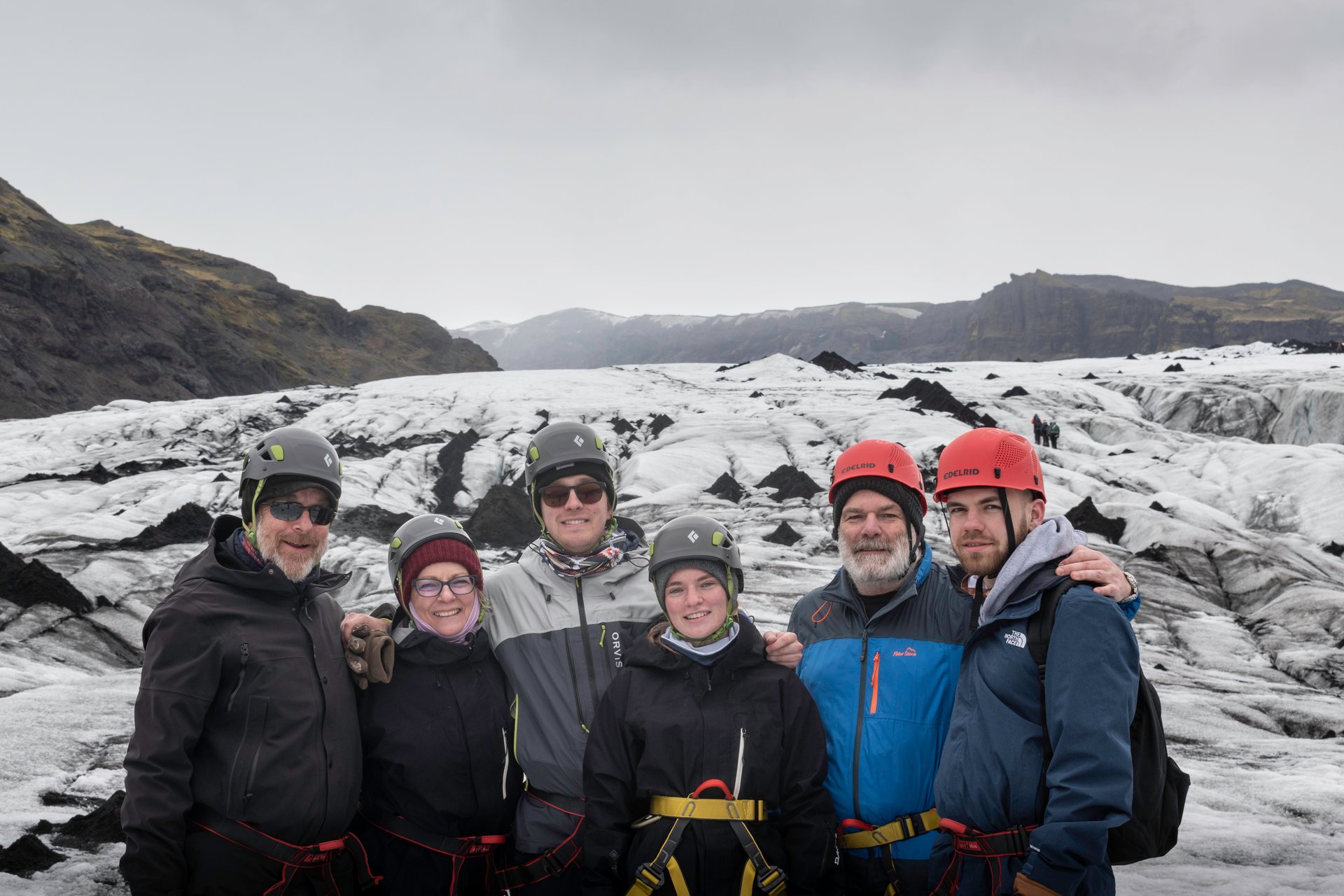
What works well for this age is framing the day as an adventure, not a tour. You are not visiting a glacier — you are walking on ice that is older than any building you have ever seen. You are not going to a beach — you are standing on volcanic sand where the waves rearrange the world every day. A guide who understands children knows how to frame these moments, and it transforms the experience.
We have seen this play out beautifully — from a mother-daughter duo exploring the South Coast to a father and son tackling Glymur and the Westman Islands. The stories are always different, but the pattern is the same: children who are engaged from start to finish.
Teenagers: Adventure Activities and the Highlands
Teenagers are the hardest travel companions — and Iceland is one of the few destinations that consistently wins them over. The activities skew toward exactly what teenagers want: physical, slightly risky-feeling, and genuinely impressive on a story level.
Snowmobiling on a glacier. Snorkeling between tectonic plates in water so clear it looks fake. River crossings in a Super Jeep on a Highland F-road. These are experiences that earn respect from a sixteen-year-old — and they look incredible on their social media, which, let’s be honest, matters to them.
The Icelandic Highlands are particularly powerful for teenagers. The landscape is so alien and dramatic that it overrides whatever detachment they walked in with.
Age Minimums and Restrictions Every Family Should Know
This is the practical section most guides skip. If you are planning an Iceland trip with children, these numbers matter:
- Glacier hiking: Minimum age 8–10, depending on the operator and the route. Children must be able to walk in crampons for 2–3 hours.
- Snorkeling in Silfra: Minimum age 12. Must fit into a dry suit and be comfortable in cold water.
- Snowmobiling: Minimum age 8 as a passenger. Minimum age 16 to drive.
- Ice cave visits: Minimum age 8 for most caves. Some easier caves accept younger children.
- Whale watching: No strict age minimum, but boats are not ideal for children under 3. Expect 2–3 hours on the water.
- Horseback riding: Most farms accept children from age 6–7 for beginner rides. Shorter rides available for younger children at select locations.
- Lava caves (illuminated): No age minimum — accessible to anyone who can walk.
- Highland F-roads: No passenger age restriction, but these routes require proper 4x4 vehicles and experienced drivers. Not a rental car route.
These minimums are worth knowing before you build your itinerary. A private guide will design around them so that every member of your family is doing something appropriate for their age — no one is left sitting in the car while the rest of the group does an activity.
Why Private Touring Solves the Problems Families Face in Iceland
No Fixed Schedule — Your Family Sets the Pace
The fundamental advantage of a private tour for families is flexibility. There is no bus to catch, no group to keep up with, no schedule designed for the average adult without children.
If the toddler falls asleep in the car and the best waterfall is fifteen minutes away, you wait. If the teenagers want an extra thirty minutes hiking to a viewpoint, you give it to them. If the grandparents need a slower morning, you start later and adjust the route.
This is not a small thing. It is the difference between a trip where the logistics are invisible and a trip where someone is always compromising.
One Vehicle, One Guide, No Strangers
For families with young children, the practical benefits are immediate. Your children are in your vehicle, with their car seats, their snacks, their comfort objects. There are no strangers, no anxiety about behavior, and no worrying about whether the group is waiting.
For multigenerational groups, the privacy means something different. It means the conversation can be personal. It means the guide gets to know your family over the course of the trip and adjusts — not just the route, but the pacing, the stories, the restaurant choices, the way information is shared. By day three of a weeklong trip, your guide is not a service provider. They are part of the group.
When a Toddler Needs a Nap and a Teenager Wants a Glacier Hike
The real magic of a private tour with a mixed-age group is the ability to split and recombine. While the toddler naps in the car with one parent, the guide takes the rest of the group to a viewpoint. While the teenagers do their glacier hike, the grandparents enjoy a warm meal in the nearby village.
A private guide is constantly reading the group — energy levels, weather windows, mood — and making micro-adjustments that keep everyone engaged. This is the part that no itinerary document can capture and no self-drive trip can replicate.
Weather Changes, Plans Change — A Guide Adapts in Real Time
Iceland weather is not background noise. It is a character in your trip, and it changes the plan sometimes daily. The South Coast might be socked in with rain, but the Golden Circle is clear — a guide who checks the forecast at 7 AM and reroutes the day saves you from spending eight hours in horizontal drizzle with children in the car.
This adaptability is especially critical for families because children have less tolerance for bad conditions and less ability to pretend they are having fun when they are not. A guide who knows three alternatives for every stop — and knows which one is the most sheltered from wind today — makes a tangible difference.
For a full picture of how private guided touring compares with other options, our self-drive vs group vs private comparison breaks down the practical trade-offs.
Self-Drive With Kids vs. Private Guide — An Honest Comparison
I will be direct: self-driving in Iceland with your family is entirely possible. The roads are good, the infrastructure is modern, and many families do it successfully every year.
But there are things a self-drive trip asks of you that compete directly with being present with your children. You are the navigator, the weather monitor, the parking strategist, the road condition checker, the fuel planner, and the driver — all while managing a car full of people with different needs. On top of that, Iceland’s weather and roads present challenges that are genuinely different from driving elsewhere. Single-lane bridges with no warning. Crosswinds that push a rental car sideways. Gravel roads that kick up rocks. These are manageable for an experienced driver — but they divide your attention at exactly the moment you want to be looking out the window with your family.
A private guide handles all of this invisibly. You get in the car in the morning and your job is to be a parent, a grandparent, a family member — not a logistics coordinator. The guide drives, reads the weather, knows the roads, handles the timing, and makes the day work. You look out the window.
For many families — especially multigenerational groups where the stakes of the trip are high and the range of needs is wide — that trade-off is the entire point.
What to Skip — And What’s Overrated for Families
Not every popular Iceland experience is suited for families. A few honest notes:
The Blue Lagoon with young children — It is a premium spa experience designed for families. Children under two are not permitted, but the environment is nice for children. Sky Lagoon has a 12 years old age limit. For families, a local geothermal pool in Reykjavík or a countryside hot pot is often a better choice — less expensive, more relaxed, and genuinely fun for children.
Reynisfjara black sand beach — Spectacular, but the sneaker waves are a real danger. Children need to be kept well back from the water line. A guide knows the safe viewing points and the current conditions. We often suggest Víkurfjara, a nearby alternative that is less crowded and offers the same visual drama with better safety for families.
Cramming the Ring Road into seven days with children — A full Ring Road circuit with kids under ten requires a minimum of ten days to be enjoyable. Anything less becomes a driving marathon where you are chasing distances instead of enjoying stops.
Over-scheduling activities — One organized activity per day is enough for most families. The rest of the day should be flexible, with stops driven by curiosity rather than a checklist.
Practical Tips for Families Visiting Iceland
What to Pack for Kids
The layering system applies to children just as it does to adults: base layer, insulation layer, waterproof outer shell. Waterproof pants are essential — Iceland is muddy, and children will sit on the ground. Good waterproof boots (not sneakers), warm hats, and gloves even in summer evenings. Sunglasses for glacier and snow glare. Swimsuit and towel for every member of the family — geothermal pools will happen, sometimes spontaneously. For a detailed packing checklist, see our luxury packing guide.
Eating With Kids in Iceland
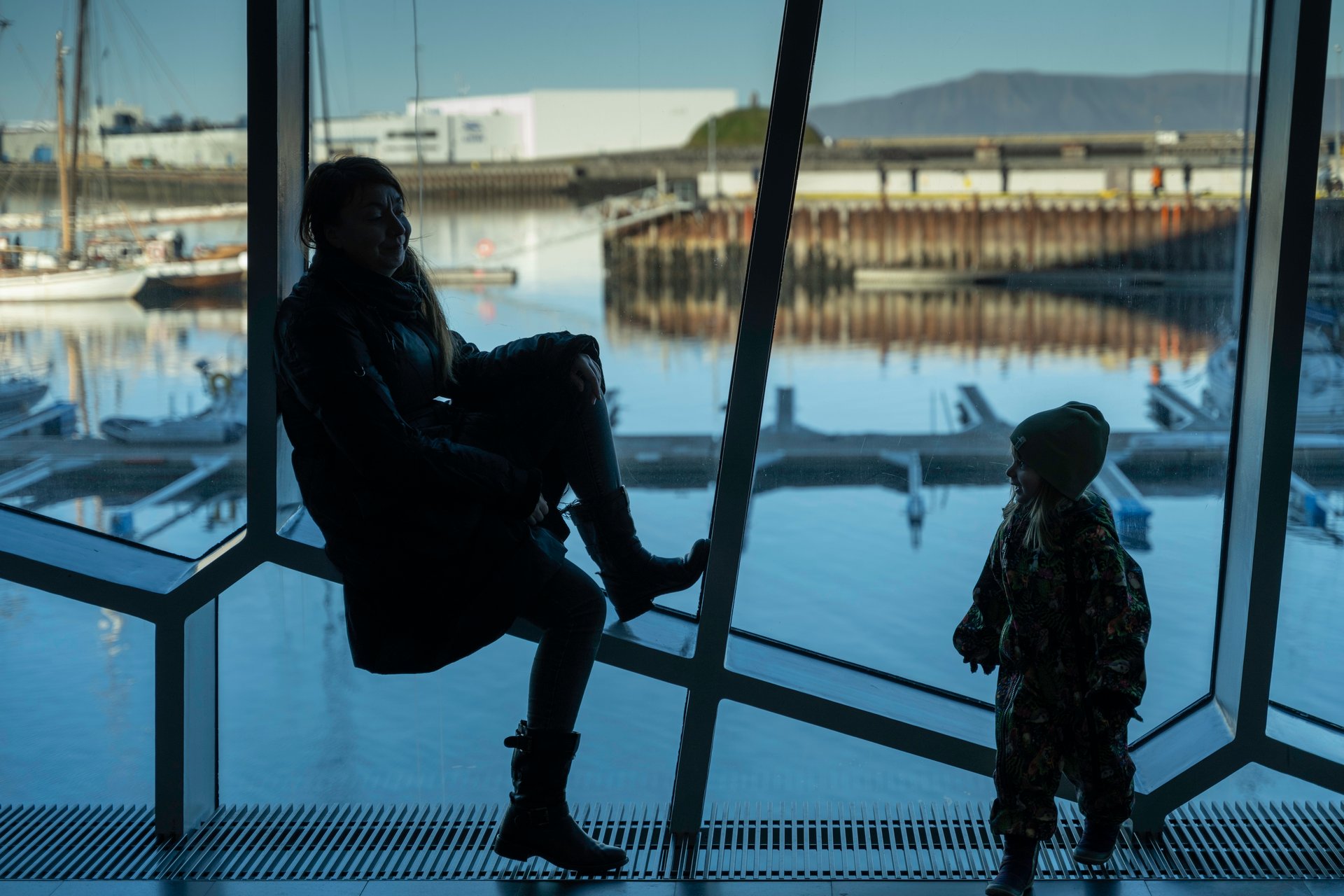
Restaurants in Iceland are welcoming to children, but the prices can be eye-opening. A family of four eating dinner at a mid-range restaurant in Reykjavík will spend $150–200 without trying. Many families supplement with grocery store runs — Krónan and Bónus are the most affordable chains. Pack snacks from home: protein bars, peanut butter, and dried fruit go a long way. On a private tour, your guide knows the best lunch spots at every price point along the route.
Car Seats, Strollers, and Mobility Considerations for Older Travelers
Car seats are mandatory for children under 135 cm in Iceland. On a private tour, we provide appropriate seats for every child in the group at no extra charge. For multigenerational groups with older travelers who have mobility considerations, our vehicle choice and route design account for walking distances, terrain difficulty, and accessibility at each stop.
Summer or Winter — Which Season Works Better for Families?
Summer is the default choice for most families, and for good reason. Long daylight hours (near 24 hours in June), warmer temperatures, access to the Highlands, puffin season, and the widest range of activities. If this is your first trip to Iceland with children, summer is the safer bet. One family’s 5-day summer trip shows just how much can fit into a well-paced week.
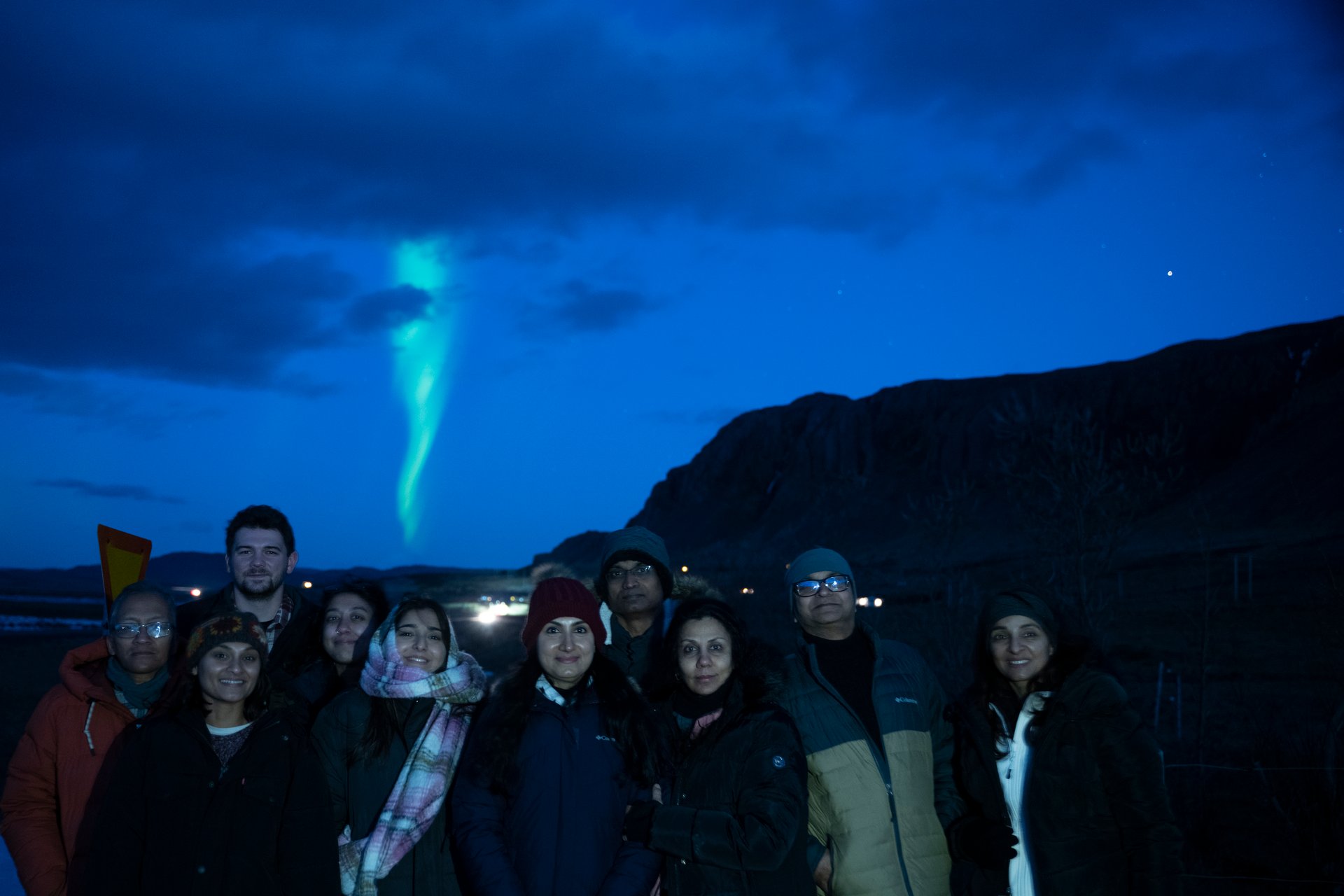
Winter appeals to families with older children and teenagers. The Northern Lights are the main draw, and when they appear, they are the kind of experience that stays with a family for decades. Ice caves inside glaciers are accessible from November through March. The landscape is stark and dramatic in a way that summer does not replicate. But the short daylight hours (four to five hours in December) and unpredictable conditions mean a winter family trip requires more flexibility and a guide who can adjust plans on the fly.
For a detailed comparison, our winter vs summer guide breaks it all down.
Sample Family Itineraries
The 5-Day Family Classic (Parents + Kids)
Day 1: Arrive, settle into Reykjavík, evening city walk Day 2: Golden Circle — Þingvellir, Geysir, Gullfoss, with a farm visit or horseback riding Day 3: South Coast — Seljalandsfoss, Skógafoss, Reynisfjara (safe viewpoint), Vík Day 4: Glacier lagoon day — Jökulsárlón, Diamond Beach, easy glacier walk (ages 8+) Day 5: Reykjanes Peninsula or Reykjavík exploration, departure
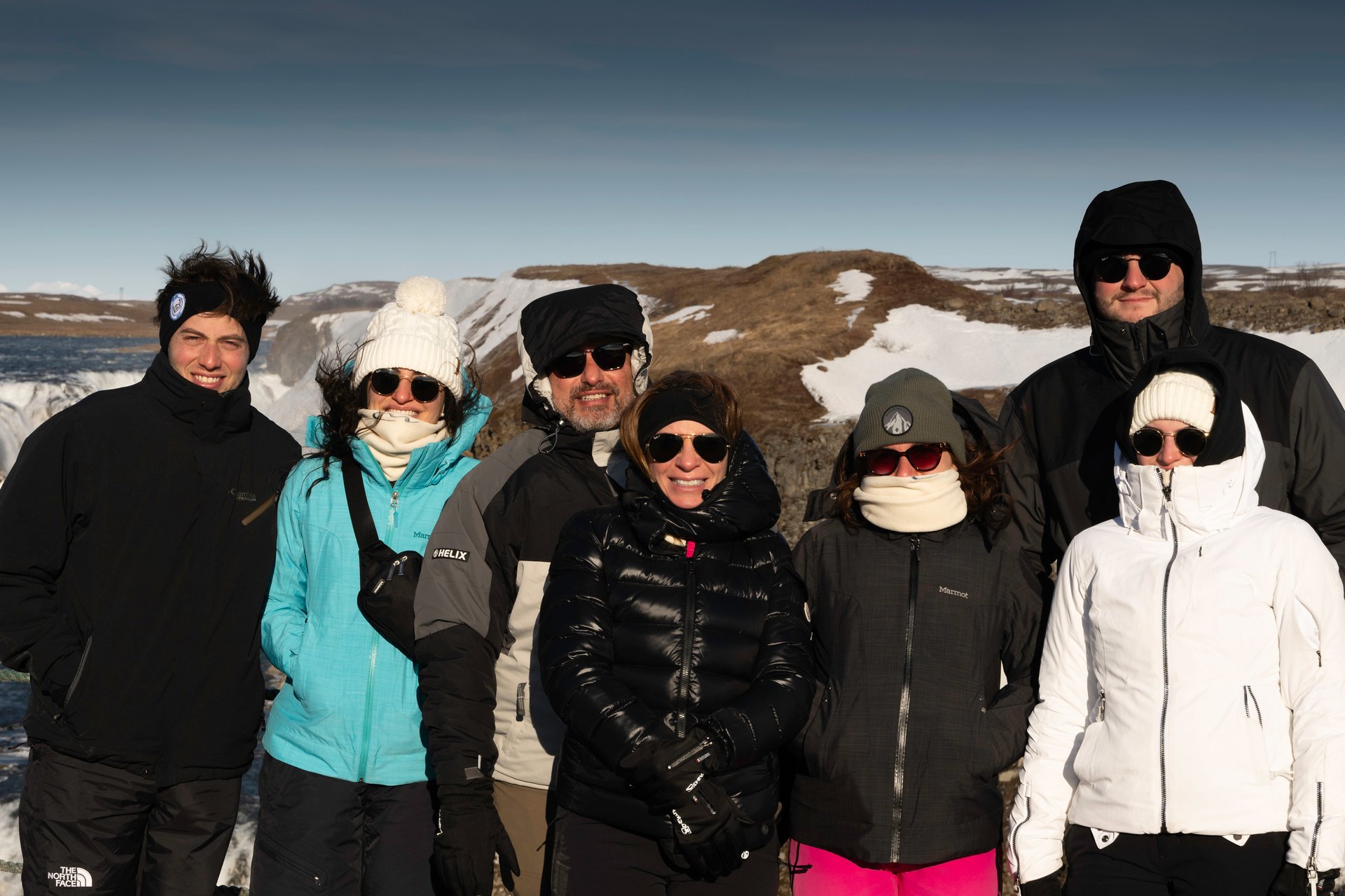
A well-paced introduction that covers the highlights without exhausting anyone. Each day has a clear theme and manageable distances.
The 7-Day Three-Generation Trip
Day 1: Arrive, Reykjavík Day 2: Golden Circle with culinary farm stops — accessible and engaging for all ages Day 3: South Coast — waterfalls, beaches, glacier views. Gentle pace, frequent stops Day 4: Glacier area — boat ride among icebergs (all ages), optional glacier hike for the active members of the group Day 5: Snæfellsnes Peninsula — coastal cliffs, lava fields, small fishing villages, Kirkjufell Day 6: Silver Circle and lava cave — geothermal landscapes, Víðgelmir (stroller-accessible), hot spring soak Day 7: Free morning in Reykjavík, departure
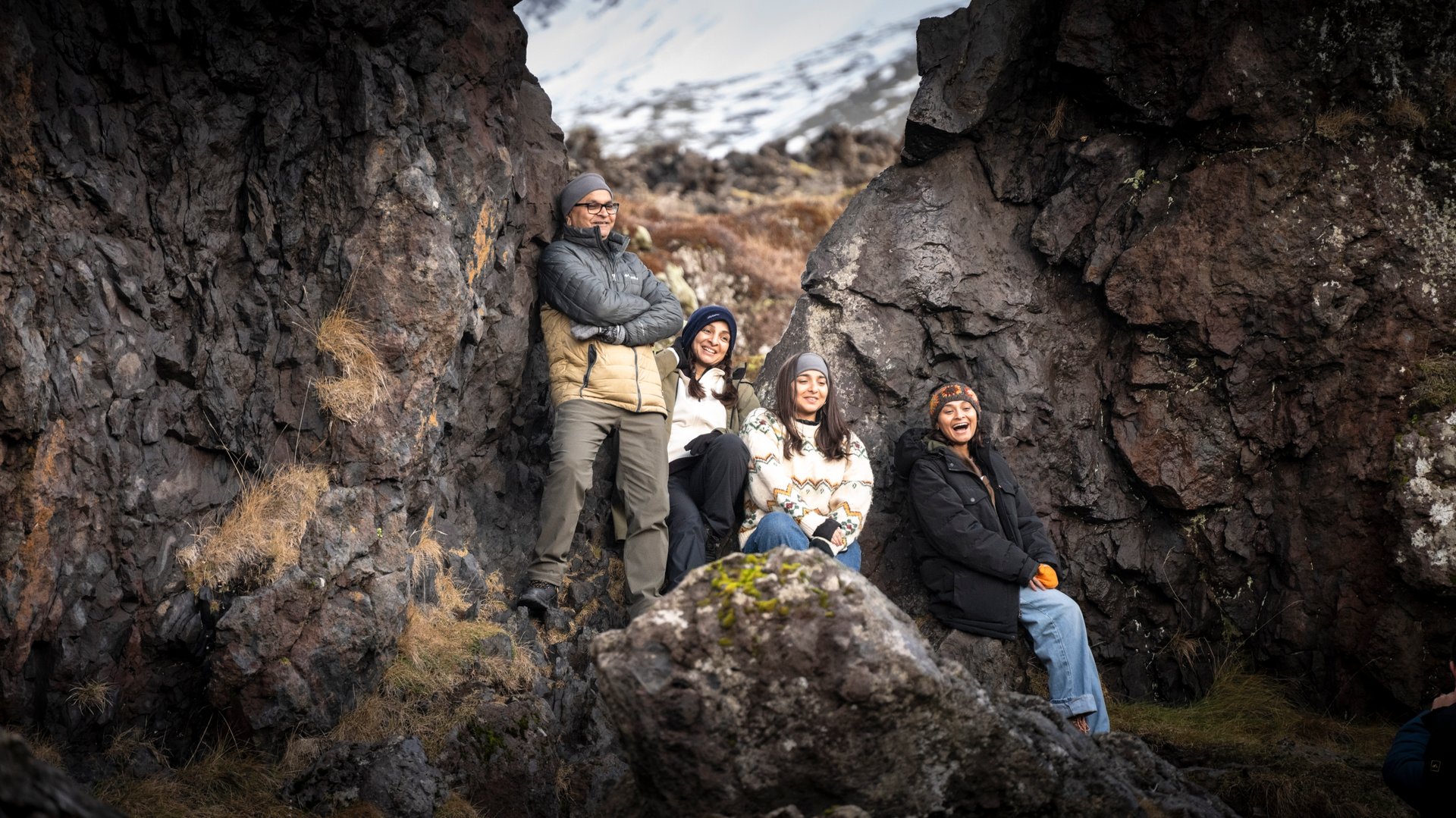
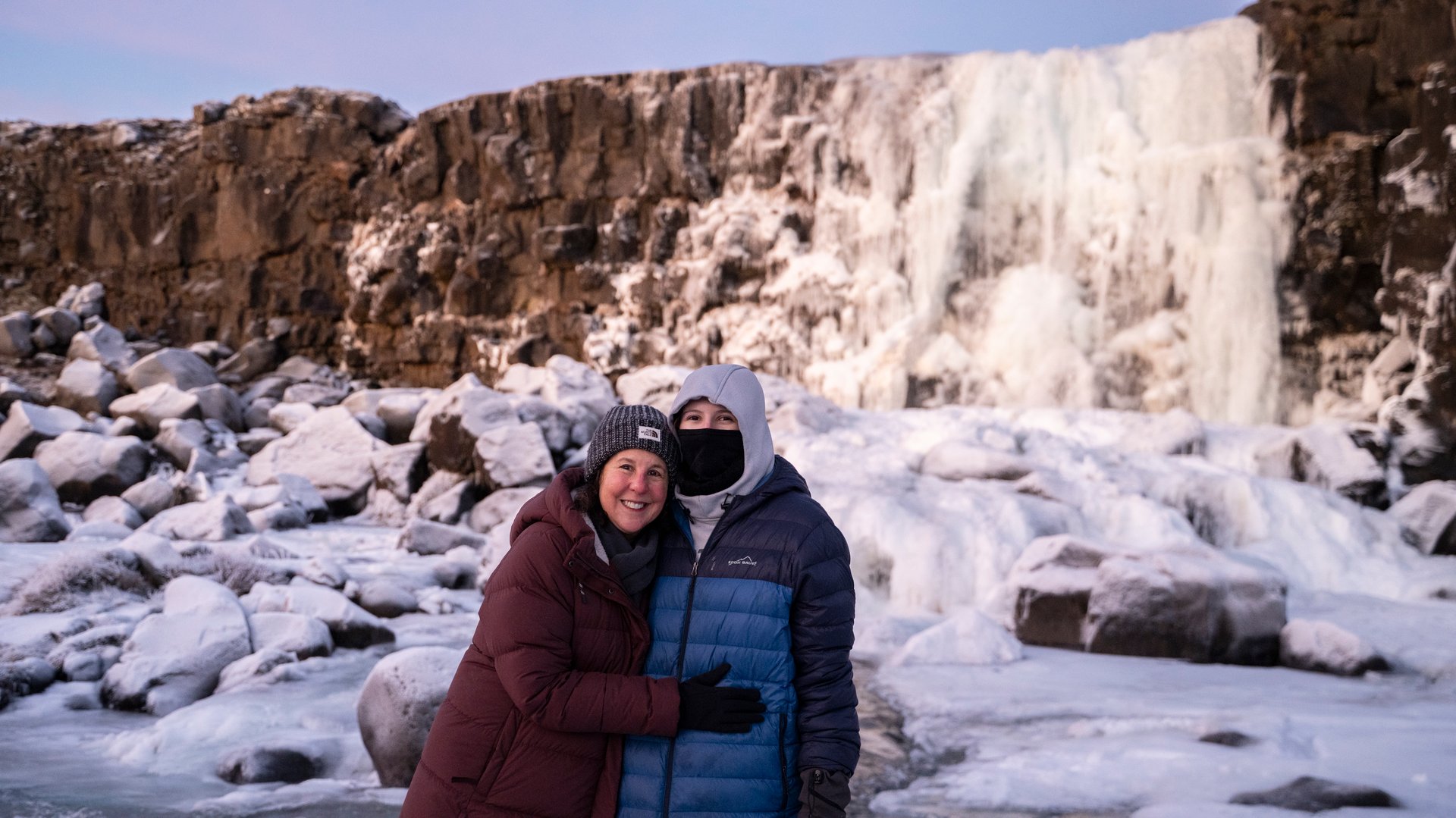
This itinerary gives the group shared experiences every day while building in enough flexibility for different energy levels and interests. The pace works whether you are twelve or seventy-five.
Both of these are starting points. Every family is different, and the best version of any Iceland itinerary is one that has been designed around the people taking it. That is exactly what we do.
Explore our multiday tours or get in touch to start designing a family trip built around your group.
FAQ
What is the best age to bring kids to Iceland? Any age works, but the sweet spot for a first trip is six and up. Children in this range can participate in most activities, engage with the landscape, and remember the experience. That said, I have guided families with toddlers and families with teenagers — Iceland adapts to both.
Is a private tour in Iceland worth the cost for a family? When you factor in what a proper rental car, full insurance, fuel, accommodation research, activity bookings, and daily logistics planning actually cost — and then add the value of having a local expert handle everything while you focus on your family — the gap is smaller than most people expect. For multigenerational groups splitting the cost, the per-person difference often becomes negligible.
How do you handle different ages and interests in one group? By designing each day with layers. There is always a core experience that works for everyone, and then optional add-ons that suit different members. If the teenagers want to do a glacier hike while the grandparents prefer a geothermal pool, we make both happen. Flexibility is the whole point.
Can we do a Ring Road trip with young children? Yes, but give it ten days minimum. Seven days is too rushed for a family with young children — the driving stretches become the trip instead of the stops. With ten days, you can move at a pace that works for everyone and actually enjoy each region.
What if the weather is bad during our trip? Weather is part of Iceland, and a guide’s job is to work with it, not fight it. If the South Coast is miserable, we reroute to a region with better conditions when possible. If rain settles in everywhere, that becomes a museum day, a geothermal pool day, or a Reykjavík exploration day. The itinerary flexes. That is the advantage.